

What’s Hiding Inside a CCTV? Practical IoT Hacking Workshop @ SINCON 2026
Beyond the Video Feed: Exploring CCTV Security Through Hands-On IoT Hacking at SINCON 2026
A CCTV camera is easy to overlook. It sits on a wall, connects to a network and quietly does its job. But what happens when you look beyond the video feed and start asking how the device actually works, what security protections it relies on, and how those protections might fail?
At SINCON 2026 in Singapore, Vantage Point Security is helping cybersecurity professionals answer those questions through practical, hands-on IoT hacking and hardware security training.
Our security consultants are sharing their real-world penetration testing expertise, guiding workshop participants through the process of investigating a live IP camera, identifying security weaknesses and understanding how vulnerabilities in network services, embedded firmware and physical hardware can combine to create serious security risks.
Rather than simply demonstrating vulnerabilities, our goal is to help train the next generation of ethical hackers, penetration testers and IoT security researchers, giving participants the knowledge and practical experience needed to investigate connected devices themselves.

From Everyday CCTV Camera to IoT Security Training Lab#
For our hands-on IoT hacking workshop, we selected the CareCam CM2507 IP camera, a connected surveillance device that provides an excellent opportunity to explore the security challenges associated with Internet of Things (IoT) technology.
Modern IP cameras are more than surveillance equipment. They are embedded computing systems running firmware, network protocols, authentication mechanisms and management services. Each of these components introduces potential attack surfaces that cybersecurity professionals need to understand.
During our security research, Vantage Point Security’s penetration testing team identified several vulnerabilities that provided valuable real-world examples for workshop participants.
The camera’s ONVIF management service contained a privileged account with an empty password, potentially allowing an attacker with network access to modify device settings and control camera functionality.
A separate authentication vulnerability allowed the camera’s live video stream to be accessed without logging in, demonstrating how weaknesses in IoT authentication and access controls can compromise privacy and security.
These findings gave participants an opportunity to understand how seemingly minor configuration and authentication weaknesses can lead to significant security exposure.
More importantly, they provided a practical foundation for learning how professional penetration testers approach IoT vulnerability assessment, network service enumeration, authentication testing and embedded device security analysis.
Going Deeper: Hardware Hacking and Firmware Security#
Network vulnerabilities are only part of the story.
To understand the full security posture of an IoT device, penetration testers often need to examine what happens beneath its software interfaces.
That means opening the hardware, identifying internal components, inspecting communication interfaces and investigating the firmware responsible for controlling the device.
During our research, we discovered that the CareCam CM2507 automatically executed a script placed on an SD card without first verifying its authenticity or integrity.
Our testing demonstrated that someone with physical access to the camera could exploit this behaviour to execute commands with root privileges, effectively obtaining the highest level of control over the device.
This finding highlights an important security consideration for IoT manufacturers: physical interfaces, removable storage and insecure firmware execution mechanisms can introduce powerful attack paths even when network-facing services appear protected.
For workshop participants, this vulnerability became a valuable hands-on learning opportunity, connecting theoretical security concepts to a real embedded device.

Sharing Our Expertise Through Hands-On Cybersecurity Training#
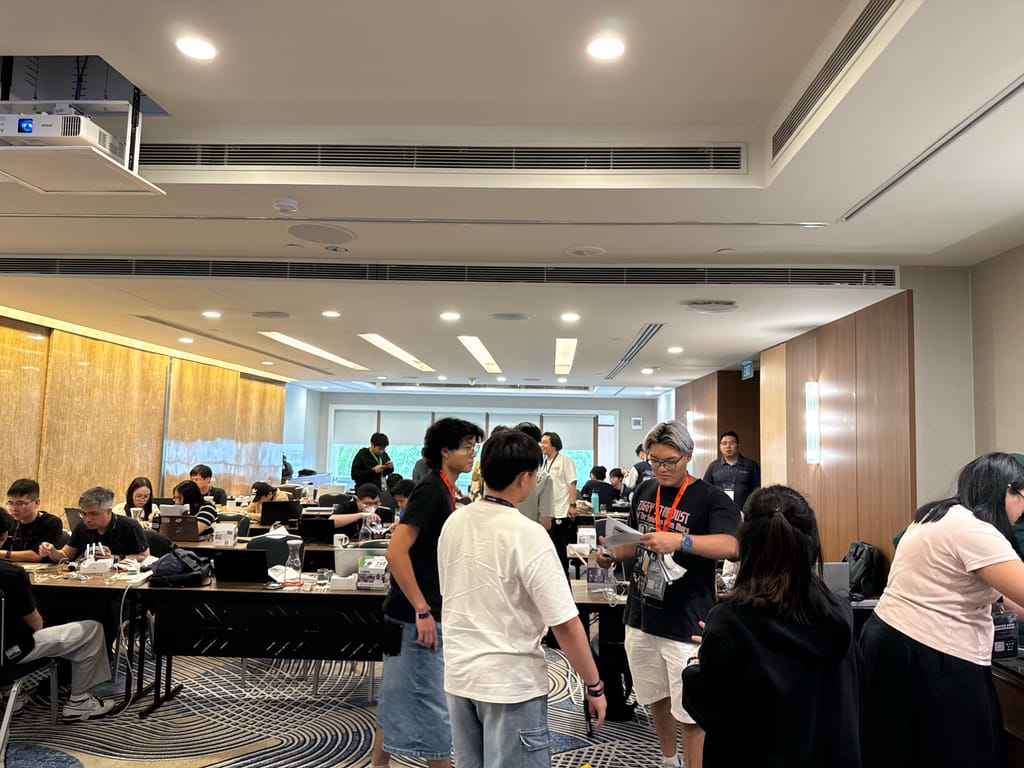
At SINCON 2026, our consultants are doing more than presenting research. We are actively training participants in the practical techniques used by professional IoT penetration testers and hardware security researchers.
Participants work directly with the camera hardware, guided by Vantage Point Security’s experienced security consultants.
The workshop introduces participants to several important areas of IoT security testing:
IoT Network Security Testing: Identifying exposed network services, analysing device communication protocols and understanding common authentication vulnerabilities.
Hardware Hacking and Interface Discovery: Opening the device, examining its circuit board and identifying debugging and communication interfaces.
UART and Serial Console Analysis: Locating UART connections and exploring how serial interfaces can provide insight into an embedded device’s operation.
IoT Firmware Extraction and Analysis: Investigating methods for obtaining firmware and understanding the software components running inside connected devices.
Embedded Device Vulnerability Research: Understanding how insecure design choices, weak authentication and untrusted code execution can create exploitable security weaknesses.
IoT Penetration Testing Methodology: Learning how to systematically investigate connected devices, validate security findings and understand their real-world impact.
By working through these techniques themselves, participants gain practical exposure to the tools, investigative processes and technical reasoning involved in professional IoT security assessments and embedded systems penetration testing.
The objective is not simply to show attendees how a particular camera can be compromised. It is to give them transferable skills they can apply when assessing other IoT devices, including smart cameras, industrial sensors, network appliances, connected infrastructure and embedded systems.
Building Cybersecurity Skills Through Knowledge Sharing#
At Vantage Point Security, we believe that strong cybersecurity expertise comes from continuous research, practical experience and sharing knowledge with the wider security community.
Our consultants regularly investigate complex security challenges across applications, infrastructure, hardware and connected devices. Workshops like SINCON provide an opportunity to bring that experience outside the testing lab and into the hands of other cybersecurity professionals.
By contributing our time, technical research and expertise to hands-on cybersecurity training, we aim to help develop stronger practical skills within Singapore’s cybersecurity community.
The best way to understand how an IoT device can be attacked is to investigate it yourself, question its assumptions and learn how its components interact.
That is exactly what we are helping participants do at SINCON 2026.
Why IoT Security Expertise Matters#
Connected devices are increasingly embedded in homes, offices, factories, healthcare environments and critical infrastructure.
Yet many IoT devices still face security challenges associated with weak authentication, exposed management interfaces, insecure firmware, insufficient hardware protections and inadequate validation of trusted code.
Effective IoT penetration testing requires expertise across several disciplines, including network security, embedded Linux, hardware interfaces, firmware reverse engineering and vulnerability research.
A traditional network security assessment may identify exposed services, but deeper hardware and firmware analysis can reveal vulnerabilities that would otherwise remain undiscovered.
That is why practical training and specialist IoT security expertise are so important.
Through our research, penetration testing engagements and community training initiatives, Vantage Point Security continues to contribute to improving the security of connected technologies.
A camera is never just a camera. It is software, hardware, network services and trust decisions packed into one small box and at SINCON 2026, we are helping more cybersecurity professionals learn how to examine every part of it.