

X-VPN Talaria Protocol: Independent Security Assessment & Penetration Testing
X-VPN Talaria Security Assessment | Vantage Point Security
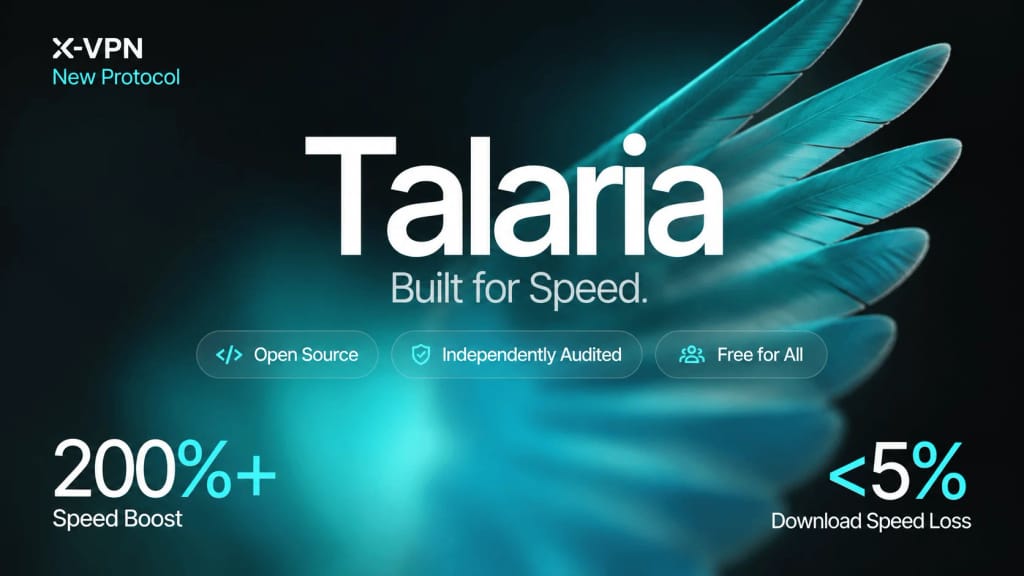

Assessing Talaria: Our Independent Security Review of X-VPN’s VPN Protocol
Vantage Point Security conducted an independent security assessment of Talaria, X-VPN’s newly open-source VPN protocol. Combining source code review with protocol-level penetration testing, our consultants examined its cryptographic implementation, authentication, session management, and handling of malicious traffic.
The result: no confirmed security vulnerabilities were identified. We provided four security-hardening recommendations, all subsequently addressed by X-VPN and independently verified by our team.
Why Test a VPN Protocol?
Strong encryption is only one part of secure communications. Certificate validation, authentication, session handling, and packet processing must work together to maintain the protocol’s intended protections.
Independent testing examines how these controls behave in practice—including when connections fail, packets are malformed, or attackers attempt to manipulate sessions.
What We Tested
Our assessment covered the Talaria protocol combining two complementary approaches:
Source code review: Examined TLS integration, cryptographic configuration, certificate validation, credential handling, session controls, traffic forwarding, and input validation.
Protocol penetration testing: Tested authentication failures, certificate attacks, replay attempts, session manipulation, malformed packets, and behaviour under controlled resource pressure.
Our consultants traced security decisions throughout the connection lifecycle, from initial authentication to traffic forwarding and session termination.
Findings and Remediation
The assessment identified no confirmed Critical, High, Medium, or Low severity vulnerabilities within the agreed scope. Four observational findings highlighted opportunities for additional hardening:
Area | Recommendation |
IP packet validation | Strengthen checks before delivering VPN traffic to the client’s network interface. |
TLS configuration | Restrict potentially unsafe cryptographic options in client settings. |
Certificate strength | Enforce minimum RSA certificate key-strength requirements. |
Credential validation | Apply consistent encoding and validation of session credentials. |
These observations did not demonstrate exploitable vulnerabilities under the assessed trust model. All four recommendations were implemented and independently verified through regression testing.
Our Conclusion
Within the agreed scope and testing conditions, the reviewed implementation demonstrated sound security design and appropriate use of established cryptographic mechanisms. We identified no demonstrated flaw undermining Talaria’s security design or its underlying cryptographic primitives.
These conclusions apply to the reviewed code and tested protocol paths at the time of assessment.
Open Source and Independent Scrutiny
X-VPN has published Talaria’s source code and made the assessment results publicly accessible. This gives developers and researchers an opportunity to inspect the implementation and build on the independent review.
Open-source development, professional security testing, remediation, and continued community scrutiny all contribute to ongoing security improvement.
Specialist Testing from Vantage Point Security
This engagement reflects our expertise in network protocols, cryptographic implementations, and security-sensitive software, alongside web, mobile, and infrastructure penetration testing.
As a CREST-accredited company with consulting teams across Singapore, Indonesia, and Thailand, Vantage Point Security supports organisations throughout Southeast Asia and internationally to meet the growing needs of cyber security.
Developing a VPN, custom protocol, or security product? Contact Vantage Point Security to discuss an independent assessment.
Explore the assessment: X-VPN’s announcement · Talaria source code